Climate & Environment
Isaias leaves at least four dead as post-tropical storm moves inland
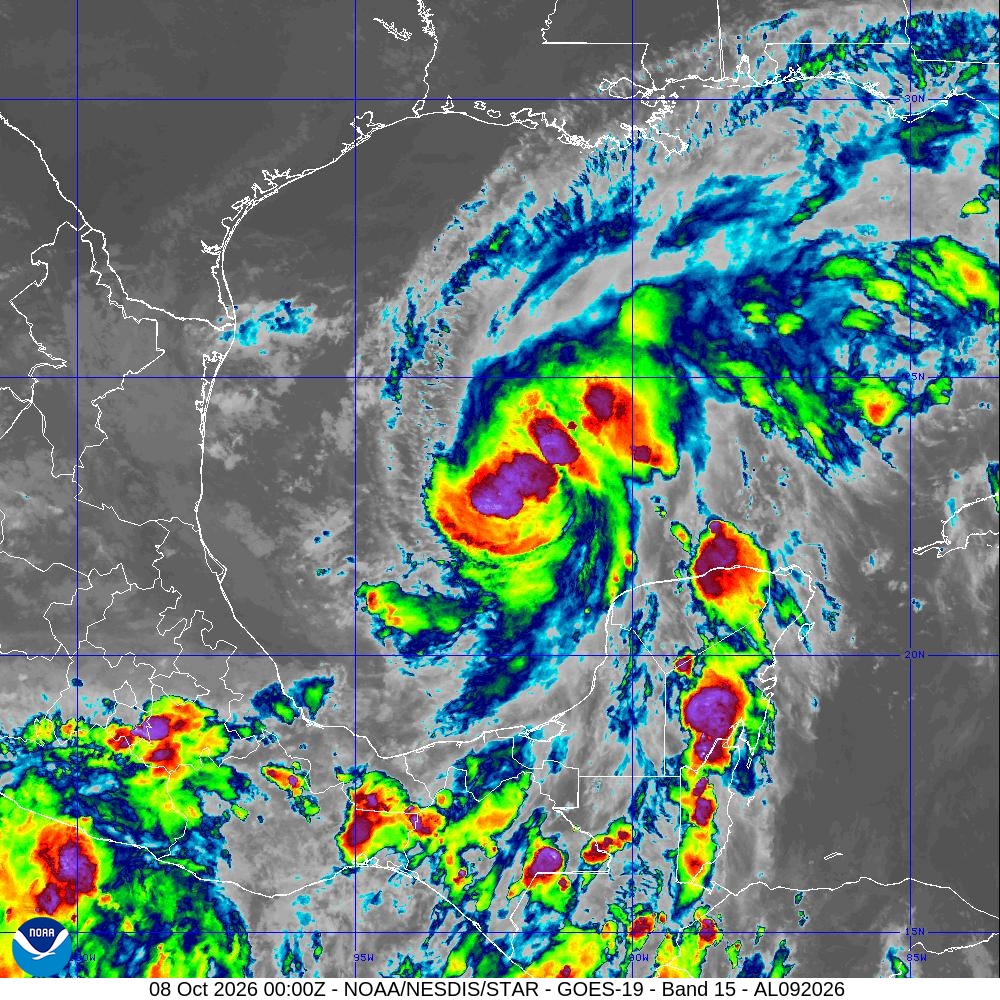
The National Hurricane Center issued its final advisory after Isaias transitioned over Alabama. AP reported four deaths, widespread outages early Saturday and continued flooding and tornado threats farther inland.
Executive summary
- Landfall: The National Hurricane Center said Isaias made landfall near Destin, Florida, at about 8:30 p.m. CDT Friday with maximum sustained winds of 105 mph, making it a Category 2 hurricane at landfall.[1][2]
- Conditions spread inland: The NHC said in its 4 a.m. CDT Saturday advisory that Isaias had rapidly weakened over Alabama and transitioned to a post-tropical cyclone; it issued no further advisories. AP reported that heavy rain and flash-flood and tornado threats continued across parts of the Southeast.[3][4]
- Reported impacts: AP reported at least four deaths linked to the storm in Florida and Alabama. Its Saturday-morning reporting counted more than 911,000 customers without power across Florida, Alabama and Georgia; that time-stamped outage estimate can change as utilities restore service.[4]
The National Hurricane Center said Isaias made landfall near Destin, Florida, at about 8:30 p.m. CDT Friday, Oct. 9, with maximum sustained winds of 105 mph. That made it a Category 2 hurricane at landfall. Isaias was the first Atlantic hurricane of the 2026 season.[1][2]
By 10 p.m. CDT Friday, the center was inland over the western Florida Panhandle with maximum sustained winds of 90 mph, moving north at about 20 mph. The center said damaging winds and flash flooding remained threats farther inland as the storm weakened.[1]
AP reported at least four storm-related deaths by Saturday: two in Florida and two in Alabama. In Florida's Escambia County, the sheriff said a woman died after a tree fell on her home and a man died of carbon monoxide poisoning from a generator running in his garage. Alabama officials separately attributed two deaths to a falling tree and a vehicle crash involving a downed tree.[4]
AP's Saturday-morning report put outages above 911,000 customers across Florida, Alabama and Georgia, citing PowerOutage.us. The figure is a snapshot, not a current count. AP also documented damage to roofs, a boathouse and a high-rise facade along the Panhandle; a later AP photo report showed continuing cleanup in Milton and Destin.[4][5]
At 4 a.m. CDT on Saturday, Oct. 10, the National Hurricane Center said Isaias had rapidly weakened over Alabama and transitioned to a post-tropical cyclone. Its discussion said this would be the final advisory. The storm's tropical classification ended, but AP reported that heavy rain, flash flooding and possible tornadoes remained concerns farther inland.[3][4]
Before landfall, officials ordered coastal evacuations and schools closed in parts of the Florida Panhandle, AP reported. Those were preparations for the storm and do not describe current orders after landfall.[6][2]
Isaias became the first Atlantic hurricane of 2026 on Oct. 8, more than four months into the season. AP reported that its formation nearly tied a 121-year record for the basin's latest first hurricane, set in 1905.[6]