World Affairs
Spain strike disrupts transport and factories over housing costs
Unions said four million workers joined; CEOE put average participation at about 5%, while Madrid Metro reported a 42% drop in peak-hour use.
Executive summary
- Transport and factories faced disruption: Spain’s 24-hour general strike on Wednesday halted Barcelona Metro service outside rush hours and disrupted factories. It was the first general strike jointly backed by CCOO and UGT since 2012.[1][2][3]
- Organizers and employers gave opposing participation estimates: CCOO and UGT said four million workers took part, while CEOE put average participation at about 5%. Madrid’s regional government separately said 9% of its public employees joined; the figures describe different measures.[1][2][4]
- Housing and wages drove the action: The strike grew from tenant protests after Congress rejected housing decrees in October; UGT called housing its main trigger. Banco de España estimated a 750,000-home shortfall accumulated from 2021 through 2025.[5][6][7]
- March turnout estimates diverged: In Barcelona, housing activists said 400,000 people marched, while the city government put the crowd at 55,000. The counts describe competing estimates, not an agreed total.[2]
A 24-hour general strike disrupted Spanish transport and factories on Wednesday, Nov. 11, as housing and wage demands drove nationwide protests; Barcelona Metro ran only during commuting peaks. The action was the first general strike jointly backed by Spain’s two largest unions since 2012. Madrid Metro said peak-hour use was 42% below the same period a week earlier.[1][2]
The two largest unions, CCOO and UGT, said four million workers took part. CEOE put average participation at about 5%, while Madrid’s regional government said 9% of its public employees joined. The figures measure different groups.[1][2][4]
Reuters reported that Red Eléctrica, Spain’s grid operator, measured electricity demand as much as 15.5% lower between 10 and 11 a.m. than its forecast. Many schools and universities closed, and airport operator AENA said about 5% of flights were canceled nationwide. AP reported that Barcelona buses also stopped outside rush hour, although many small shops opened.[1][2]
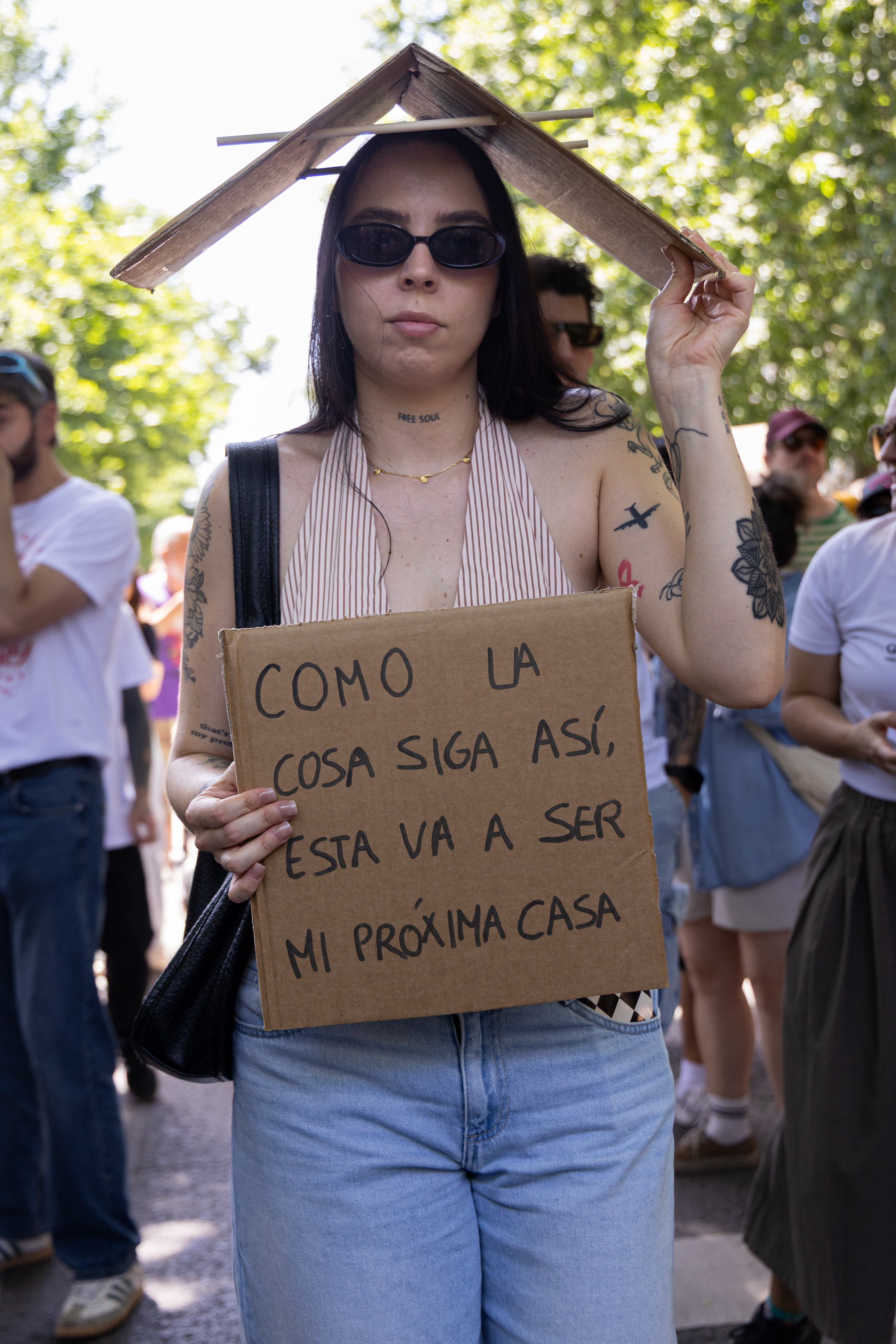
Barcelona’s march drew competing estimates: housing activists counted 400,000 people, while the city put the crowd at 55,000. RTVE reported that Madrid’s government delegation counted 120,000 at the capital’s march and Barcelona’s city police counted 55,000. Organizers canceled four marches in Andalusia because of heavy rain.[2][4]
At 5 p.m., Spain’s Interior Ministry reported 919 incidents and 52 arrests. Union leaders alleged police used force against protesters and said they would take legal action, RTVE reported.[4]
The strike’s slogan was “Salaries. Housing. Prices.” UGT secretary-general Pepe Álvarez said housing was the mobilization’s main trigger and called for wage gains and public services as well. UGT said the action was directed at municipal, regional and national authorities.[6]
Tenant groups called for automatic lease renewals and protections against eviction and rent increases. CCOO and UGT pressed for more public housing and a new minimum-wage agreement, while organizers also targeted short-term tourist rentals and property speculation.[1][2][3]
A 36-year-old hospital information-technology worker told Reuters that rising rents made it impossible for him to move out and live alone. CEOE vice president Ángel Nicolás said small firms struggled to recruit and called for more homebuilding and lower taxes on construction and home purchases.[1]
Banco de España’s 2025 annual report estimated a 750,000-home shortfall accumulated between 2021 and 2025. It compared completed homes with growth in resident households; the figure is a supply-demand gap, not a count of vacant homes.[7]
Spain’s official gazette recorded nationwide calls by CCOO and UGT alongside several other unions, including separate calls covering Galicia and the Basque Country. A Nov. 5 order set minimum electricity services during the stoppage.[8]
The strike grew from tenant protests after an Oct. 2 parliamentary defeat for two housing decrees. A march the next day carried a call for a general strike; CCOO and UGT joined on Oct. 5, hours after Prime Minister Pedro Sánchez called an election, EL PAÍS reported. The campaign followed the eviction and later death of 87-year-old Maricarmen in Madrid.[2][5]
The strike brought labor organizers into a housing campaign that began outside the labor movement. It was not tied to a single bill or government body: unions and tenant groups directed demands at municipal, regional and national authorities.[5][6]
Spain’s official election decree sets voting for Nov. 29 and the campaign period from Nov. 13 to 27. AP quoted political scientist Oriol Bartomeus saying the Socialists needed the strike to succeed without violence if the campaign was to return to housing. Reuters reported the government blamed opposition-led regional and municipal administrations for high rents and inadequate supply.[1][2][9]
Employers called the action a failure and argued for more construction; unions and tenant groups said governments should intervene to make housing affordable.[1][4][6][9]