Technology & Science
Crew-13 launches toward a planned ISS docking record
Jessica Watkins leads a four-agency crew on a roughly eight-hour route. NASA says the schedule would be the fastest U.S. launch-to-docking at the station.
Executive summary
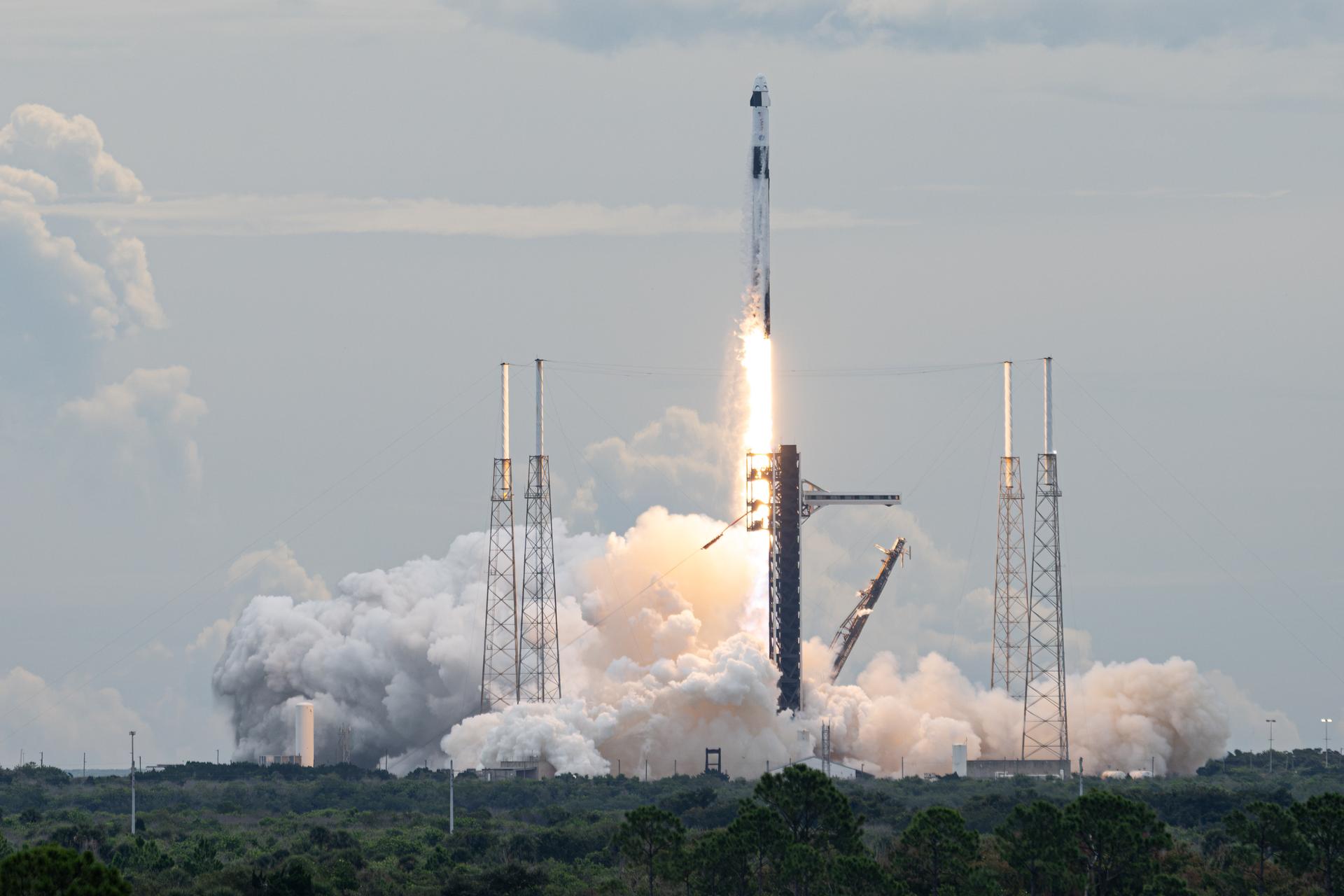
- The launch: A SpaceX Falcon 9 carried NASA astronauts Jessica Watkins and Luke Delaney, Canadian Space Agency astronaut Joshua Kutryk and Russian cosmonaut Sergey Teteryatnikov into orbit from Florida at 11:10 a.m. EDT on Thursday, NASA said.[1][2]
- The planned arrival: NASA targeted docking at the International Space Station for about 7 p.m. EDT, after a flight of just under eight hours. The agency says that would be the fastest launch-to-docking by a U.S. spacecraft in the station's history; docking had not yet occurred when this article was published.[1][3]
- A command milestone: Watkins is commanding her second spaceflight. The Associated Press reported she became the first Black woman to lead a crew to orbit with Thursday's launch.[4][2]
Crew-13 lifted off from Cape Canaveral Space Force Station at 11:10 a.m. EDT, carrying four astronauts to the International Space Station. NASA said the Dragon capsule reached orbit and separated from the rocket's second stage shortly after launch. The crew was then beginning a series of orbital maneuvers toward the station.[1][3]
The schedule calls for docking at about 7 p.m. EDT at the station's Harmony module. NASA describes the roughly seven-hour, 50-minute transit as a potential record for a U.S. spacecraft traveling from launch to docking at the ISS. That remained a planned milestone, rather than a completed record, at publication time.[1][3]
The launch followed a roughly three-week delay to fix a leak in the spacecraft's fuel system, the Associated Press reported. NASA and SpaceX conducted a final flight-readiness review before the Oct. 1 launch. The successful liftoff begins the mission; it does not establish new details about the earlier leak.[2][5]
Watkins, a NASA geologist and veteran of a 2022 station mission, is commanding Crew-13. The Associated Press reported that she is the first Black woman to lead a crew to orbit. NASA's biography identifies Crew-13 as her second spaceflight and lists her role as commander.[2][4]
Pilot Luke Delaney is making his first spaceflight. Mission specialists Joshua Kutryk of the Canadian Space Agency and Sergey Teteryatnikov of Roscosmos complete the crew. Their mission will overlap briefly with Crew-12 before that team returns to Earth, NASA said.[1][2]
NASA says the crew will support studies using stem-cell-derived tissues to improve disease modeling and pharmaceutical testing, including for heart disease and Parkinson's. The mission also plans to test a mostly autonomous plant-growth system and continue research into blood-flow changes and astronaut health in microgravity.[1]
Those are research aims, not promised medical outcomes. The station provides a setting for studying how cells, plants and people respond to microgravity; any health benefits would depend on what researchers learn and later validate on Earth.[1]