World Affairs
Saudi says Riyadh airport attacks killed pilot and two others
The new toll is separate from three deaths reported after attacks at Abha and Riyadh airports on Oct. 6 and 7. After GACA said Oct. 8 operations had returned to normal, it reported another attack and temporary suspension on Oct. 10.
Executive summary
- Oct. 6–7 attacks: Saudi Arabia's General Authority of Civil Aviation said attacks on facilities at Abha and King Khalid international airports on Oct. 6 and 7 killed three residents and injured 36. It reported material damage at the airports.[1][2][3]
- A separate Oct. 8 attack: GACA said attacks on King Khalid airport facilities and a Saudia aircraft on Oct. 8 killed three Saudi citizens and injured several others. Saudia identified the pilot killed as Capt. Hamoud Ali Alkalthami and said the plane was damaged while parked with no passengers aboard.[4][5][6]
- Responsibility remains attributed, not independently established: The Houthis claimed to have targeted the airport with a ballistic missile. GACA's account of the Oct. 8 attacks did not identify a perpetrator or specify the weapons used. Earlier airport attacks were also claimed by the group, but attribution remains based on the parties' statements.[4][1][6][2]
- Airport operations resumed: GACA said operations resumed and air traffic returned to normal after the Oct. 8 attacks. That status was superseded by its Oct. 10 statement that a separate attack prompted another temporary suspension while officials assessed injuries, damage and facility safety. The authority did not give a reopening time in that statement; AP later reported that an official aviation notice set the suspension through midnight.[4][7][8]
- Follow-up toll for Oct. 10 attack: GACA's follow-up statement reported 12 deaths and 309 injuries, including some critical cases. The earlier AFP report based on anonymous medical sources preceded the official toll and should not be read as the final count.[9][10]
Saudi Arabia's General Authority of Civil Aviation said two attacks on Thursday, Oct. 8, targeted King Khalid International Airport in Riyadh: one at airport facilities and another at a Saudia aircraft. The authority said three Saudi citizens were killed and several people of different nationalities were injured. It reported material damage and said operations and air traffic returned to normal.[4][6][11]
Saudia identified one of the dead as Captain Hamoud Ali Alkalthami. The airline said an aircraft was damaged while parked on the ground and had no passengers aboard when the incident occurred. The official statements reviewed did not say the aircraft was carrying passengers or operating a flight at the time.[5][6][12]
The Houthis said they targeted the airport with a ballistic missile. GACA's statement did not name those responsible or specify what weapons were used in either attack. The claim therefore does not independently establish how the aircraft was damaged or who caused the deaths.[4][6][11]
GACA initially said several people were injured and operations temporarily suspended. In a follow-up statement early Sunday, it reported 12 deaths and 309 injuries, with some in critical condition. The authority's statements did not specify a weapon or assign responsibility. AP attributed the missile strike on terminals 3 and 4 to an unnamed regional official and later reported the Saudi-led coalition blamed the Houthis; the group had not publicly claimed the attack in reports reviewed. AP reported the initial airport suspension was through midnight, but the sources reviewed do not establish the operating status after that notice expired.[7][9][8][13][10]
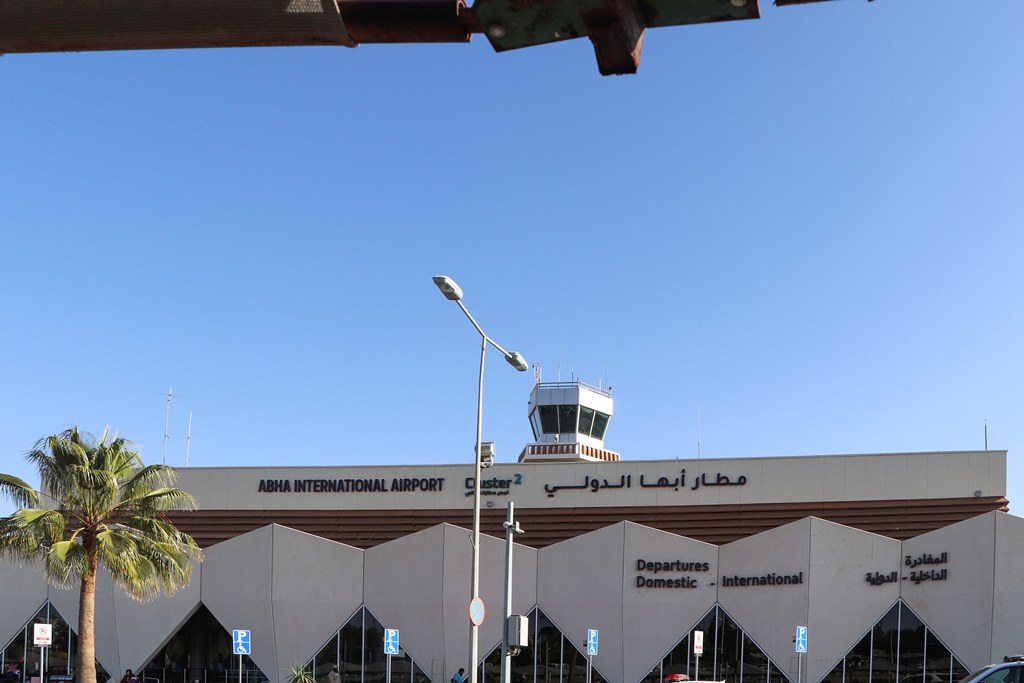
In a separate statement, Saudi Arabia's General Authority of Civil Aviation said facilities at Abha International Airport and King Khalid International Airport in Riyadh were attacked on Tuesday and Wednesday, Oct. 6 and 7. The authority reported three deaths, 36 injuries and some material damage. Its breakdown identified two women, residents from Morocco and Algeria, killed at Abha, and a Sudanese resident killed at King Khalid.[1][2][3][14]
GACA said 28 people were injured at Abha and eight at King Khalid. The statement said emergency teams responded and injured people were taken to hospitals. It did not specify the duration or extent of any disruption to airport operations.[1][2][3]
GACA's public statement described attacks on the two airports but did not identify who carried them out. Houthi military spokesperson Yahya Saree said the group had targeted King Khalid airport with drones and Abha with missiles and drones. The claims of responsibility do not independently establish the weapons used or the circumstances of the airport damage.[1][2][14][3]
A Saudi-led coalition spokesperson said forces intercepted a ballistic missile north of Riyadh and destroyed its launch platform in Sanaa. The Associated Press said it could not independently verify the coalition's account. The public statements reviewed do not establish whether the intercepted missile was one of the weapons associated with the attacks on the airports.[2][3]
Before GACA published its casualty statement, the Houthis said on Thursday, Oct. 8, that they had attacked King Khalid International Airport with a ballistic missile. Reuters initially reported no immediate Saudi confirmation. GACA later confirmed that two attacks occurred at the airport and an aircraft, but its statement did not confirm Houthi responsibility or the claimed weapon.[15][4]
The airport attacks came as fighting intensified between the Houthis and Saudi-backed Yemeni government forces. Reuters reported that Houthi missiles also targeted Aden's international airport on Oct. 7, with Yemen's Transport Ministry saying one landed near the runway before a scheduled flight from Cairo. The reported airport damage and competing claims underline the exposure of civilian aviation, while the sources do not establish a wider shutdown of Saudi air services.[3][2][14]