U.S.
Pentagon and Lockheed outline 10-year F-35 framework, pending funding
The plan would link aircraft production with spare parts and sustainment across a decade. It is not yet a funded order, and the proposed annual production rate remains 156 jets.
Executive summary
- The framework covers 850 U.S. aircraft over 10 years: The Department of War and Lockheed Martin announced a framework spanning F-35 production Lots 21 through 30. It also covers initial spare parts, modification kits, sustainment and international customer orders, according to the company’s release.[1][2]
- It still needs congressional authority, appropriations and a formal award: Lockheed’s release says the F-35 Joint Program Office and the company would finalize contract terms, pricing and schedules only if Congress grants multiyear authority and the required appropriations. Reuters reported the announcement was a framework, not an order.[1][2]
- The stated annual production rate is unchanged: The company said production would continue at 156 aircraft per year. Lockheed says longer planning horizons and bulk purchases could improve supply-chain stability and reduce costs, but the announcement did not give a total contract price or final schedule.[1][2][3]
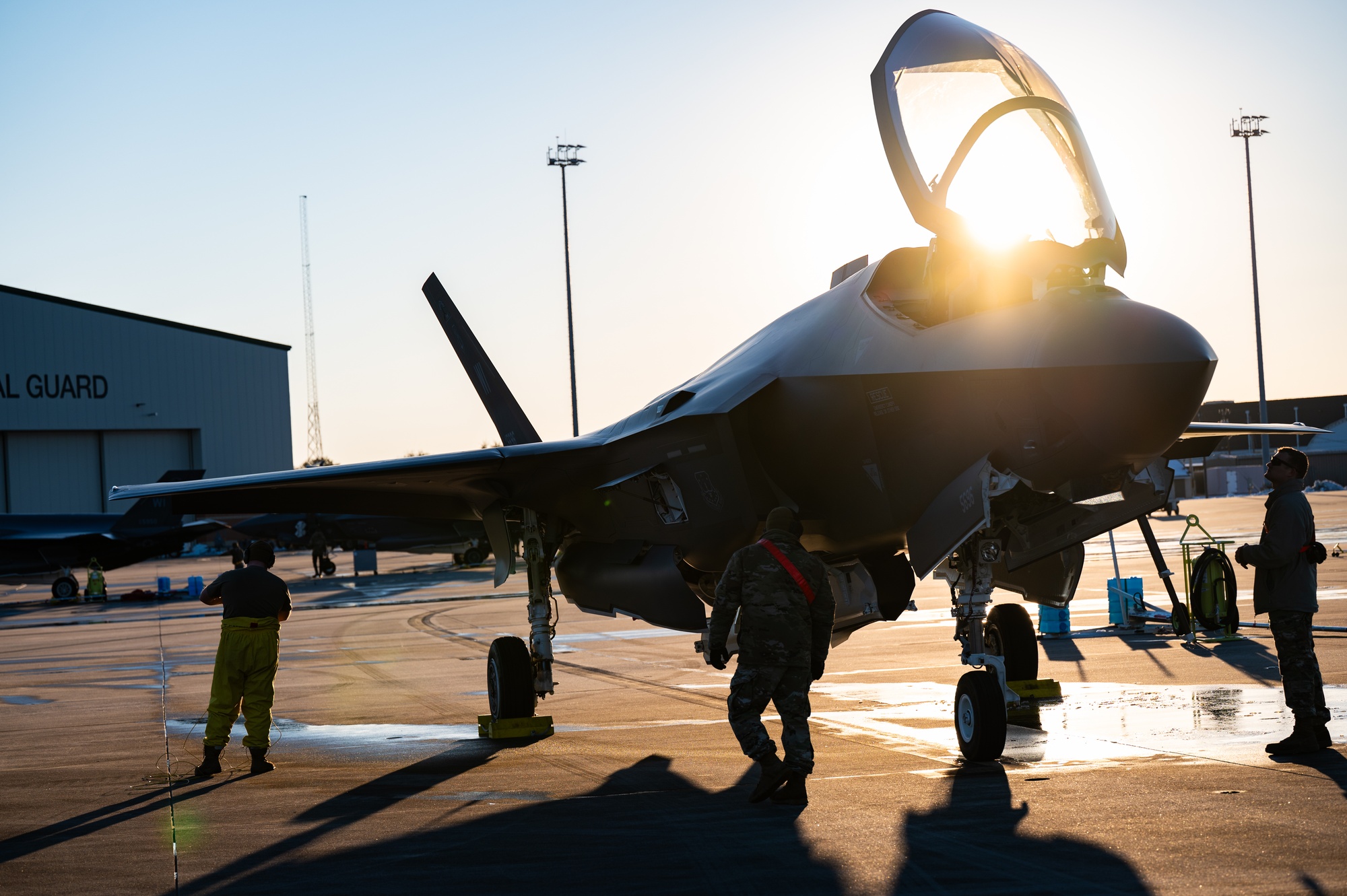
The Pentagon and Lockheed Martin announced a framework on Thursday for multiyear production and support of the F-35 Lightning II. The outline covers 850 aircraft for the United States over 10 years, associated initial spares, modification kits and sustainment, with international orders also included across production Lots 21 through 30, the company said.[1][2]
The announcement sets a direction for negotiations; it does not place an order for 850 jets. Lockheed said the F-35 Joint Program Office and the company would work out contract terms, pricing and schedules through a formal award if Congress provides multiyear authority and the associated appropriations. Reuters likewise reported that the framework does not itself constitute an order.[1][2]
That distinction leaves key fiscal details open. The public announcement did not state a total price for the 10-year arrangement, a per-aircraft price or the timing of a final award. Lockheed expects the model to produce savings through longer-term pricing and volume discounts, but that is the company’s projection, not a finalized cost estimate.[1][2]
The framework pairs aircraft production with spare parts, modification kits and sustainment services. Lockheed said that steadier demand would give suppliers more notice to invest and buy materials in volume, while helping address logistics bottlenecks. The company also said the framework could support readiness improvements, but the release did not publish performance targets for aircraft availability or repair times.[1]
The stated production rate is 156 aircraft a year, unchanged from the company’s current plan. So the headline number describes aircraft covered across a long period; it does not announce a sudden increase in factory output. Reuters reported that Lockheed would fund at least $7 billion in program initiatives, while the framework announcement did not itemize those projects or provide a schedule for them.[1][2]
The proposal follows years of debate over a longer-term F-35 procurement and sustainment arrangement. Before Thursday’s announcement, Breaking Defense reported that congressional authority remained an obstacle and that lawmakers had considered conditions tied to parts, cost savings and readiness. The new framework addresses some of those themes, but it does not by itself resolve the pending authorization, funding or contract details.[3][1]
Congressional authorization and appropriations are the immediate gates identified by Lockheed. A formal award would then establish the enforceable terms, prices and schedule. Until those steps occur, the announcement is evidence of an intended procurement model, not a guarantee that every aircraft or support item will be bought on the proposed timeline.[1][2]
The result will matter beyond the airframe count. A multiyear structure could make demand more predictable for the suppliers that produce engines, electronics and other components, while tying those purchases to upkeep of the existing fleet. Whether that lowers costs or improves readiness will depend on the terms Congress authorizes and the performance measures in the eventual contract; neither outcome is established by the framework announcement.[1][2][3]