Climate & Environment
Panama declares emergency after magnitude 7.7 quake damages buildings
Saturday's declaration prioritizes aid for affected areas. The preliminary damage and injury figures are still being assessed, and the reported $100 million is a response ceiling, not a confirmed expenditure.
Executive summary
- A major quake in Herrera province: The U.S. Geological Survey lists the Oct. 9 earthquake at magnitude 7.7, near Pitaloza Arriba in Panama's Herrera province. A separate magnitude 6.6 quake followed, and the Associated Press reported a sequence of aftershocks.[1][2][3]
- Damage beyond the epicenter: Panama's first national impact report, cited by EFE, described damage to public buildings, roads, churches and water plants. EFE reported that a hotel, the provincial government building and one cathedral tower collapsed in Penonomé.[4][5]
- Injuries reported at two collapse sites: The government's Oct. 10 emergency briefing cited about 21 people treated for injuries in preliminary data. AP and EFE reported a figure of 27 injured from the same response briefing; those early totals should not be treated as a final reconciled count.[6][7][8]
- Government activates emergency response: Panama's government declared a state of emergency on Saturday to prioritize aid. Its preliminary inventory listed 426 residences evaluated, 419 schools and 21 health facilities affected. EFE reported that up to $100 million could be directed to the response; that reported ceiling does not mean the full amount has been spent or disbursed.[6][8][7]
- Capital water plant recovered: The Federico Guardia Conte plant in Chilibre initially operated at 20% after earthquake-related electrical failures. TVN Noticias reported the national water authority director's later statement that the plant had reached 100% recovery; the agency continued assessing other facilities.[9][4]
The U.S. Geological Survey lists a magnitude 7.7 earthquake at 17:56 UTC on Oct. 9, roughly 10 kilometers southwest of Pitaloza Arriba in Herrera province. The agency revised its initial magnitude estimate; its event page gives the updated location and depth. A later magnitude 6.6 earthquake struck west of Río Grande, according to the USGS, and AP reported more than 45 aftershocks recorded by the University of Panama.[1][2][3]
The U.S. Tsunami Warning Center issued a bulletin after the first quake. Its notice provides the event's origin time and initial alert information; it is a separate warning record from the USGS earthquake catalog.[10]
In an initial national impact report, Panama's Ministry of Government and Civil Protection System said nearly all potable-water plants had suffered some structural damage. EFE reported that the capital-supplying Chilibre plant was operating at 20% in that early update, while hospitals in Tonosí and Pedasí had minor damage and four apartment buildings in Panama City were also affected.[4][5]
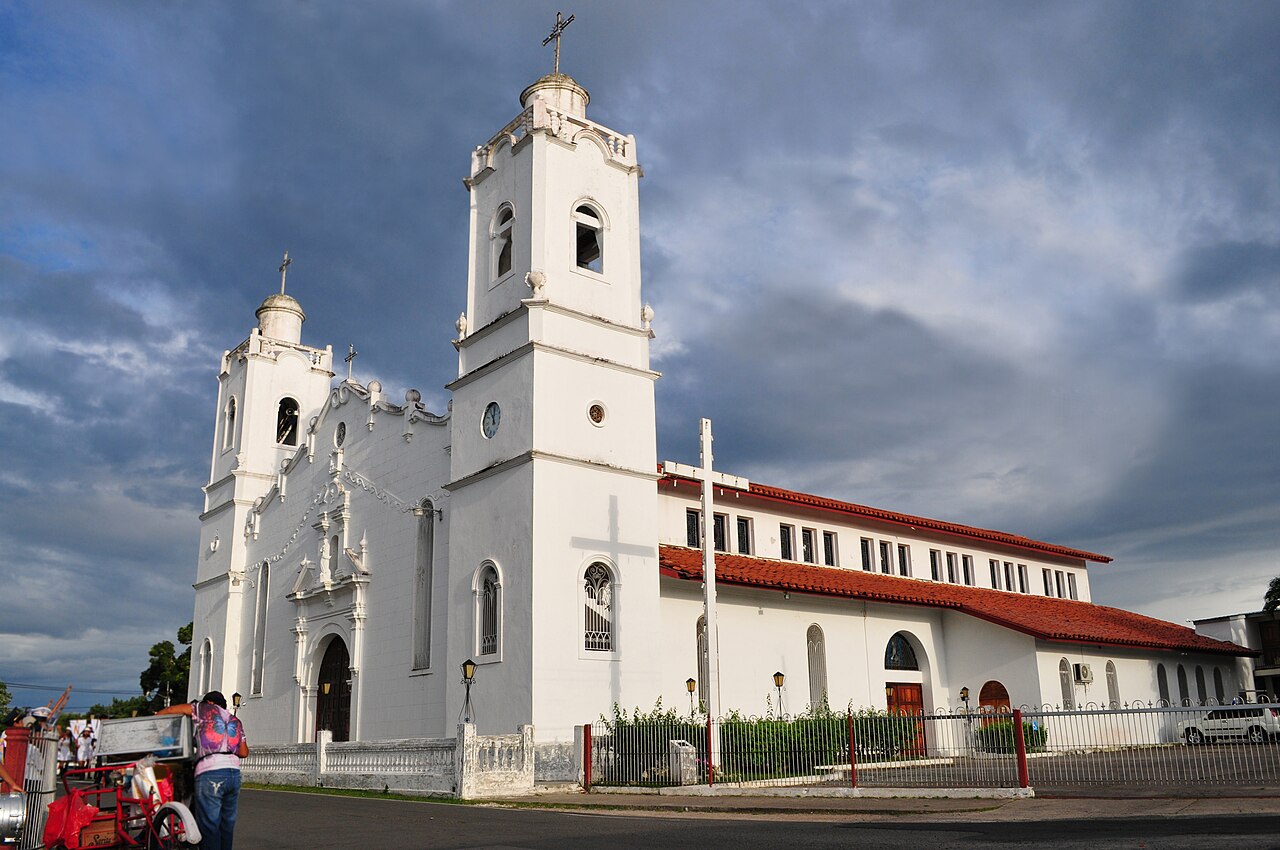
EFE's reporters documented the collapse of a small hotel and the provincial government headquarters in Penonomé, along with one tower of the city's San Juan Bautista Cathedral. The ministry's early report said no deaths had been reported at that point. A 2011 file photo of the cathedral accompanies this article; it predates the earthquake and does not show the damage.[4][11]
In a report published Oct. 10, AFP quoted Rene Garcia, head of Panama's emergency operations, saying injuries had been reported among people trapped at two separate collapsed structures: one near a church in Veraguas province and another at a hotel in Coclé province. Garcia said no deaths had been reported at that point.[12]
TVN Noticias, citing the Ministry of Government and Sinaproc's first national impact tally, reported that 15 students at Escuela Alberto Zúñiga had minor injuries and that one person was rescued at a municipal market in Aguadulce. Those accounts describe different incidents and are not a consolidated national count of injuries.[13]
Panama's government declared a state of emergency at an extraordinary Cabinet meeting on Saturday, Oct. 10, to prioritize assistance after the quake. The Presidency's preliminary report said 426 residences had been evaluated, 419 schools and 21 health facilities were affected, and about 21 people had received injury treatment. It also described damaged roads and nine structurally compromised vehicle bridges in affected areas.[6]
The Presidency's release described the injury figure as preliminary. AP and EFE reported 27 injured from the government's briefing, a different early figure; the reports do not explain the difference or establish a final nationwide tally. AP said officials reported damage in all 10 provinces and two Indigenous territories and no deaths attributed to the quakes as of Saturday.[6][7][8]
EFE reported that the emergency could channel up to $100 million toward earthquake damage. The government's public release said it was accessing non-reimbursable assistance and that any loans, if needed, would be concessional; it did not say the full ceiling had been spent or committed. The extent of the damage, repairs and school closures remained under assessment, with officials saying a decision on classes would follow Sunday.[8][6]
The Instituto de Acueductos y Alcantarillados Nacionales said an earthquake-related electrical failure reduced production at the Federico Guardia Conte plant in Chilibre to 20%, causing irregular service in areas it supplies. In an update published Oct. 9, TVN Noticias quoted the agency's director as saying the plant had reached 100% recovery and that production had recovered at many of the other affected plants. The agency was still assessing facilities nationwide.[9]
The early damage tally and the later production update describe different stages of the response. The Chilibre recovery does not establish that every plant or damaged building has been restored; Panama's water authority said its national assessment was continuing.[4][9]