Business & Markets
Hall and Woodford win economics Nobel for work on stabilisation
The Royal Swedish Academy recognized research behind modern stabilization models, while emphasizing that better tools do not remove the uncertainty or trade-offs facing policymakers.
Executive summary
- The award: The Royal Swedish Academy of Sciences awarded Robert E. Hall of Stanford and Michael Woodford of Columbia the 2026 Sveriges Riksbank Prize in Economic Sciences in Memory of Alfred Nobel. Its citation was “for microeconomic foundations of macroeconomic stabilisation.”[1]
- The contribution: The Academy said their work helped rebuild macroeconomic models around the choices and expectations of households and firms, giving policymakers a framework for studying how fiscal and monetary decisions affect economic swings.[1][2]
- The limit: The prize recognizes influential analytical tools, not a guarantee that governments or central banks can prevent recessions, inflation, or forecasting errors. The Academy says the models continue to be refined.[1][3]
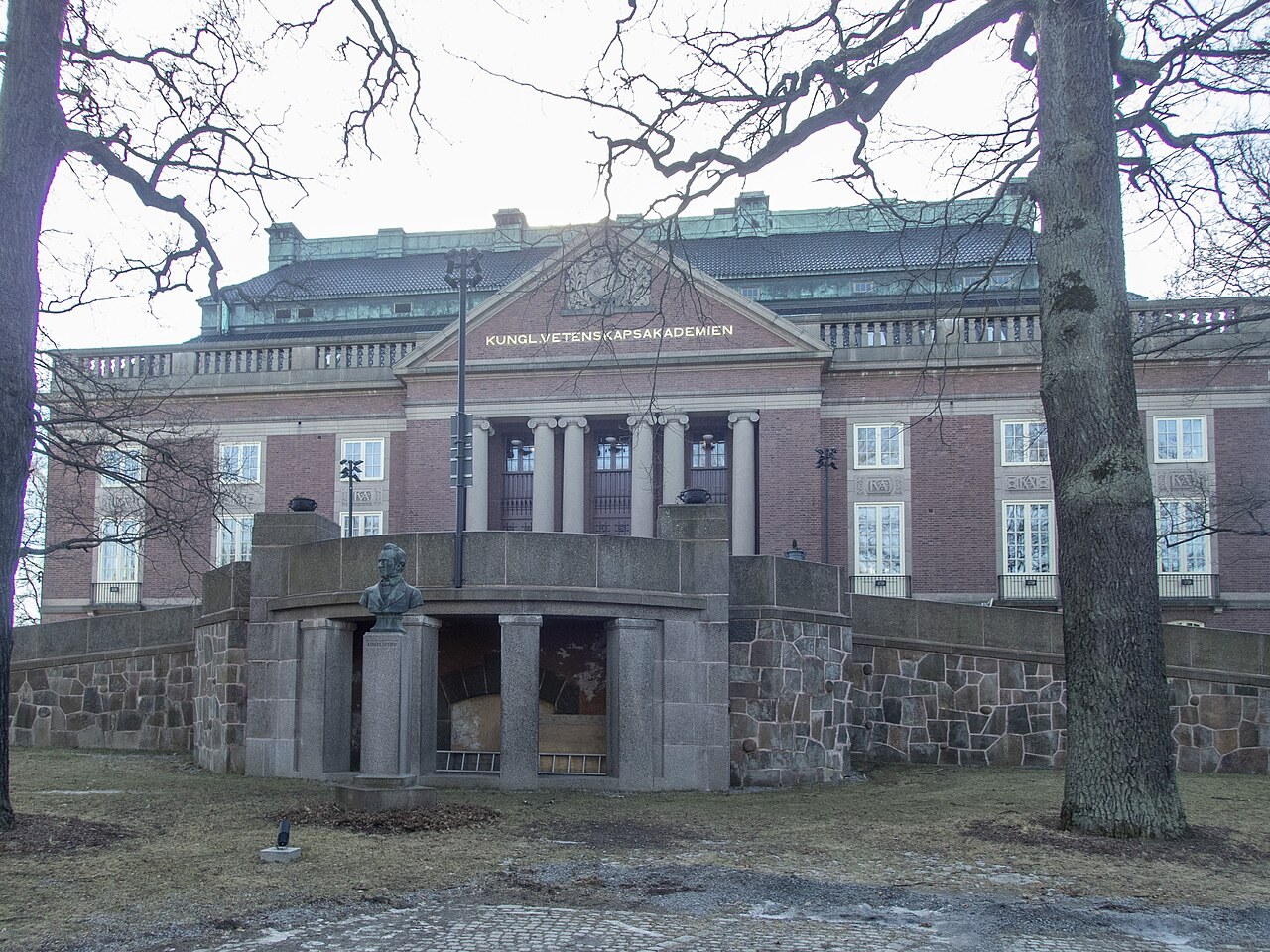
The Royal Swedish Academy of Sciences on Monday awarded the economics prize to Robert E. Hall and Michael Woodford for work on the microeconomic foundations of macroeconomic stabilization. Hall is a professor at Stanford University; Woodford is a professor at Columbia University. The award is formally named the Sveriges Riksbank Prize in Economic Sciences in Memory of Alfred Nobel and carries 12 million Swedish kronor, to be shared equally, the Academy said.[1][2]
The phrase “microeconomic foundations” describes an effort to explain economy-wide outcomes by modeling the decisions of households and businesses. Instead of treating consumption, prices, and output only as aggregate statistics, this approach asks how people decide whether to spend or save, how firms set prices, and how expectations about future policy shape those choices. The Academy says Hall’s and Woodford’s contributions helped renew stabilization policy after the inflation and unemployment shocks of the 1970s.[1][3][2]
Hall’s work examined how consumption responds to expectations about future income. The Academy’s background material describes his finding that changes in expected income can produce unpredictable changes in consumption, complicating efforts to forecast how households will react to policy. Hall also studied households whose limited access to credit constrains their ability to shift spending over time.[1][3][2]
Woodford developed a framework for monetary policy that links firms’ price-setting decisions with inflation, output, and expected interest rates. His 2003 book, “Interest and Prices,” brought together key parts of what became known as New Keynesian monetary theory. That framework helps explain why a central bank’s decisions and communication about the future can affect current pricing and spending choices.[1][3][2]
The Academy says models built on this research are used by central banks and finance ministries. That is a claim about the influence of the broader research program; it does not mean every institution uses one identical model or that model output alone determines a policy decision.[3]
Stabilization policy aims to soften downturns and restrain overheating through tools such as interest rates, taxation, and public spending. Those measures operate with delays and incomplete information. A demand shock, an energy supply disruption, or a shift in expectations can create different pressures, and policy that addresses one problem may aggravate another.[3][2]
The Academy’s own explanation cautions that recessions and high inflation have not disappeared, even as research has improved the tools available to policymakers. The award therefore recognizes a framework for reasoning about how policy travels through an economy, not a formula that makes outcomes predictable or removes disagreement over the right response.[3][1]
The practical question is how central banks and governments apply those models when shocks overlap and assumptions fail. Hall’s and Woodford’s work gives economists ways to connect policy choices to the behavior of households and firms; the consequences still depend on evidence, timing, and decisions made under uncertainty.[3][2]