Transport & Infrastructure
FAA names two potential sites in probe, disables function on about 60 routers
The agency says it blocked the locations and disabled a router function on about 60 similar devices as Sunday flight disruptions continued.
Executive summary
- FAA identifies two possible source locations: The Federal Aviation Administration said an initial investigation points to a radar site in Amarillo, Texas, and a radio communications site in El Dorado, Arkansas, as potential sources of the data surge behind Friday’s nationwide ground stop.[1]
- The agency disabled a function on similar routers: The FAA says the network stabilized after the locations were blocked and that it disabled the broadcasting function on new routers and about 60 similar devices while the agency and L3Harris investigate the root cause.[1]
- Flight schedules were still recovering Sunday: The Associated Press reported just over 1,300 cancellations among more than 26,000 flights scheduled Sunday, and said officials expected full schedules by late Sunday or early Monday. Reuters cited a separate FlightAware snapshot showing more than 10,000 flights canceled or delayed.[2][3]
The Federal Aviation Administration said Sunday that an initial investigation into Friday’s nationwide ground stop points to two potential sites: a radar facility in Amarillo, Texas, and a radio communications site in El Dorado, Arkansas. L3Harris, the agency’s network service provider, had been working at the El Dorado site and deployed a new router there, the FAA said.[1]
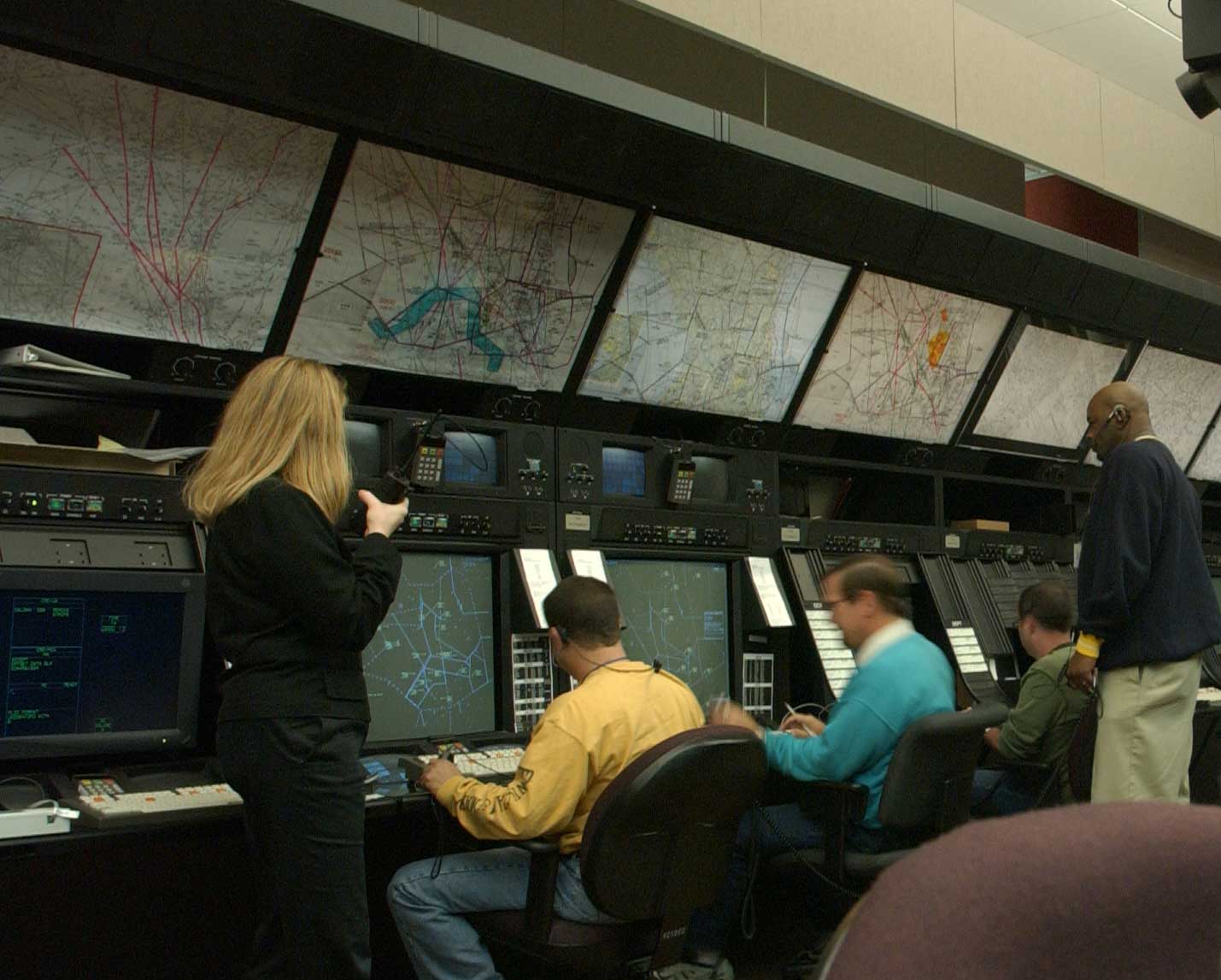
The FAA said legacy equipment became unstable as data flooded its telecommunications network at about 1,000 connection attempts every four to five seconds, disrupting aircraft communications and radar feeds. Instability spread to 17 of the country’s 22 air route traffic control centers, prompting a nationwide stop on departures as a safety precaution.[1]
When the data inconsistencies appeared, L3Harris blocked the two locations and the network stabilized, the FAA said. The agency said the broadcasting function was disabled on all new routers and, as a precaution, on about 60 similar routers elsewhere in the system.[1]
The FAA described the system as stable and operations as returning to normal, while saying it and L3Harris were still investigating the root cause. The agency said it believes disabling the originating routers addressed the initial cause. It reported no indication of a cyberattack or outside malicious actor.[1]
Two people familiar with the investigation told Reuters that router installation was completed successfully under FAA oversight and that communications problems emerged after the site was returned to the FAA.[3] Transportation Secretary Sean Duffy said the cause remained unknown; the FAA says it and L3Harris are continuing to investigate.[1][3]
The FAA said major air traffic facilities generally schedule maintenance at night, when traffic is lower, but Friday’s work was a routine replacement at a remote site. The agency said similar work had been performed for decades without affecting operations and that it would reconsider when such replacements take place.[1]
Duffy told Reuters that the routers involved were bought in 2001 and had become obsolete by 2006. The FAA linked the incident to its legacy time-division multiplexing system and said the work was part of a long-running shift from copper lines to fiber, not the agency’s separate modernization program.[1][3]
The ground stop was lifted Friday night, but crews and aircraft remained out of position as airlines rebuilt schedules. The FAA said approximately 12,462 flights were canceled Friday, while cautioning that not all of those cancellations were directly caused by the nationwide order.[1]
For Sunday, the Associated Press cited aviation analytics firm Cirium for just over 1,300 cancellations among more than 26,000 scheduled flights, a cancellation rate of about 5.2%. The rate before Friday’s ground stop averaged 3.4% for U.S. departures, the AP reported. Officials expected full schedules by late Sunday or early Monday.[2]
Reuters, citing FlightAware, reported a separate Sunday snapshot of more than 2,300 cancellations and about 7,700 delays. The figures cover different flight measures and come from separate data providers; Reuters said airlines had canceled more than 6,400 U.S. flights and delayed more than 8,000 on Saturday.[3]
Reuters also reported sharply different cancellation rates by carrier Sunday: 28% of JetBlue flights and 17% of American flights were canceled, compared with 3% to 5% at United, Southwest and Delta.[3]
The FAA said some radio frequencies and radar feeds remained available during the disruption, and that all aircraft and passengers landed safely. It said controllers and pilots followed established procedures while the agency waited for the network to remain stable before allowing flights to resume.[1]