Business & Markets
China’s economy grew 4.5% in Q3 as exports strengthened and property investment fell
Official data put third-quarter growth above the prior quarter and a Reuters poll forecast, but falling property investment and modest retail growth show the recovery remains uneven.
Executive summary
- Growth accelerated slightly from the second quarter: China’s National Bureau of Statistics reported that GDP grew 4.5% year over year in the third quarter, up from 4.3% in the second quarter. Quarter-on-quarter growth was 1.2%; the first three quarters together expanded 4.6% from a year earlier.[1][2]
- Exports strengthened while property investment contracted: The NBS reported that September exports rose 29.6% year over year in yuan terms. For January through September, fixed-asset investment fell 7.2% and property-development investment fell 20.6%.[1][3]
- Household retail growth remained modest: Retail sales grew 1.1% in September from a year earlier. The statistics bureau said insufficient domestic demand remained a prominent problem, tempering the stronger headline GDP figure.[1][2][4]
China’s National Bureau of Statistics said gross domestic product increased 4.5% in the July-to-September quarter from a year earlier, compared with 4.3% in the second quarter. The economy grew 1.2% from the previous quarter after seasonal adjustment. For the first nine months, GDP was 4.6% higher than in the same period of 2025. These are preliminary official estimates, not an independent measurement of activity.[1][2]
The year-on-year result was slightly above the 4.4% median forecast in a Reuters poll of economists. The government’s stated full-year growth target is 4.5% to 5%, the Associated Press reported. One quarter’s growth rate does not establish that the target will be met, and the comparison with a year earlier can move differently from quarter-on-quarter momentum.[2][3]
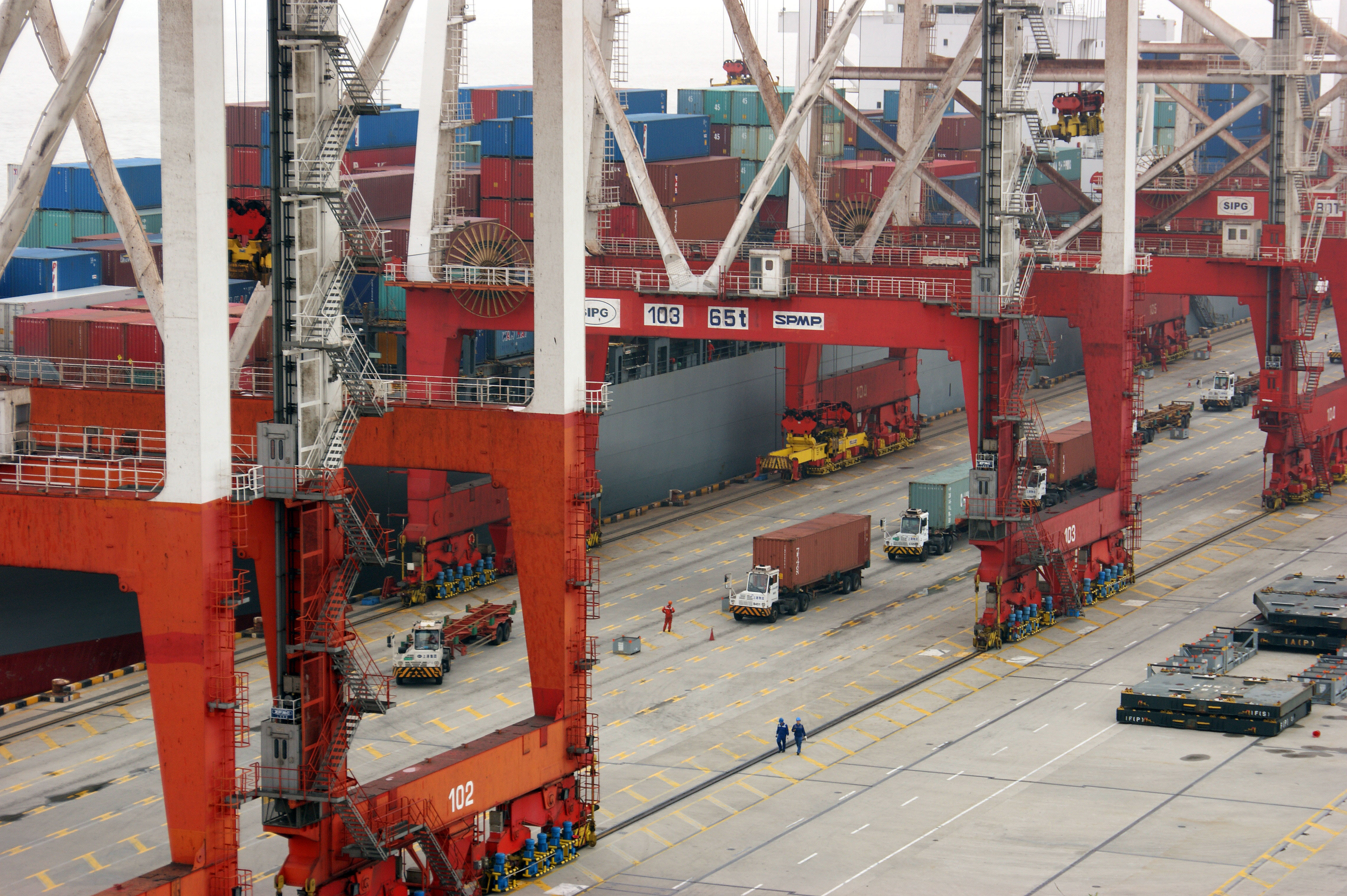
The NBS reported that exports in yuan terms rose 29.6% in September from a year earlier and 16.4% over the first nine months. The AP and Reuters described stronger exports as an important support for growth. That strength came alongside signs of uneven household and investment demand rather than a broad-based surge in all parts of the economy.[1][3][2]
Retail sales, a closely watched measure of consumer spending, increased 1.1% in September from a year earlier. Reuters reported that the pace improved from August, but remained subdued. The NBS’s own summary said insufficient domestic demand was still a prominent problem.[1][2]
Fixed-asset investment fell 7.2% in January through September compared with the same period a year earlier, according to the NBS. Property-development investment dropped 20.6%. The figures point to continuing strain in a sector that has weighed on builders, local finances and household confidence; they do not by themselves show how quickly individual property markets or developers are changing.[1][2][4]
The combination of faster headline growth, strong reported exports and weak property investment leaves a mixed picture. Economists cited by AP said policy support and external demand were helping, while domestic consumption and the property downturn remained concerns. The next releases will show whether export momentum continues and whether household spending and property activity improve; the Q3 data alone cannot answer that.[3][4][1]