Business & Markets
Anduril plans $3.7 billion Maryland yard for submarine parts
The proposed facility would add a new supplier to a strained submarine industrial base. Its $3.7 billion private investment, a separate Navy contract ceiling and conditional public incentives are distinct commitments.
Executive summary
- The project: Anduril says it plans to invest $3.7 billion in Arsenal-2, a two-million-square-foot shipbuilding facility at Sparrows Point in Baltimore County. The company expects initial operations in 2030, subject to permits and site approvals.[1][2][3]
- The Navy contract: The Navy award is worth up to $2.9 billion and is tied to production outcomes, according to Anduril. It is separate from the company's planned capital investment; adding the two figures does not mean $6.6 billion in cash is being handed to the project.[1][4][3]
- The public support: Maryland and Baltimore County say they will seek to match up to 13% of anticipated private investment through existing programs and new appropriations. The state says new funding still requires legislative approval, and county tax-credit legislation remains pending.[2][5][6]
- The capacity test: The facility is intended to make submarine components, not complete submarines. GAO said in April that Virginia-class output was one boat a year as of June 2025, half the Navy's goal, while warning that the broader investment program lacked clear cost and performance oversight.[3][7]
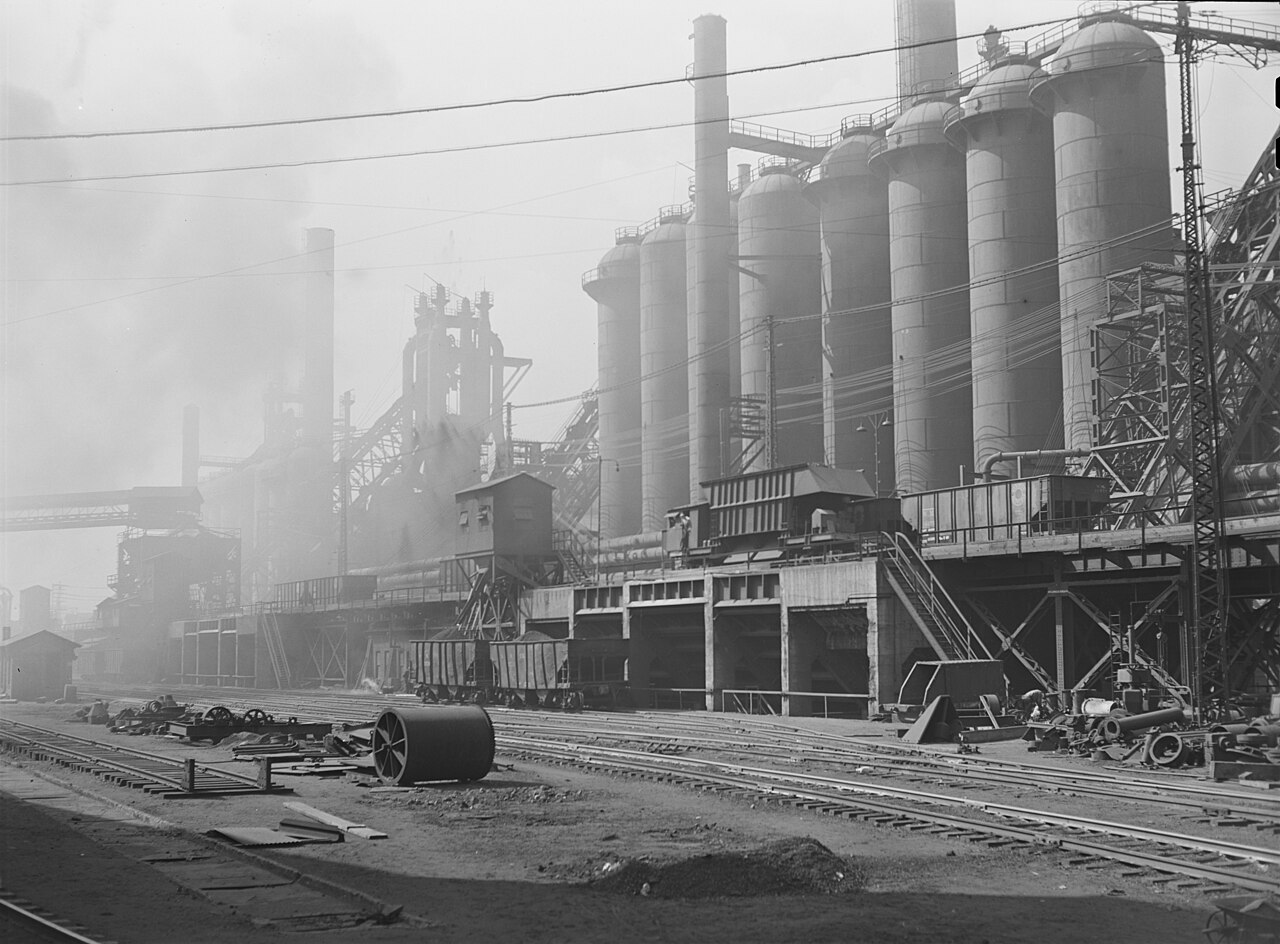
Anduril Industries plans to invest $3.7 billion to build Arsenal-2, a two-million-square-foot shipbuilding facility at Tradepoint Atlantic in Sparrows Point, Maryland. The company says the site will manufacture components for Virginia-class submarines, with construction beginning after permits and site approvals and initial operations expected in 2030. The project is a major proposed expansion at a former steelmaking complex, but it is not a new submarine assembly yard.[1][2][3]
The Navy separately awarded Anduril a contract valued at up to $2.9 billion. The company says payments will be tied to demonstrated production outcomes. The announced $3.7 billion is Anduril's planned private investment; the Navy ceiling is a purchase contract for what the factory produces. Combining them into $6.6 billion describes two different figures, not a single government grant or a pot of cash already committed to construction.[1][4][3]
Anduril describes a staged production plan: components first, followed by modules and eventually larger hull sections. USNI News reported that torpedo tubes are among the facility's initial products. Those parts would feed work at existing submarine builders rather than replace their final assembly. General Dynamics Electric Boat and HII's Newport News Shipbuilding remain the Navy's two Virginia-class prime builders, according to USNI.[1][3]
The schedule is consequential because the Navy's submarine program has struggled to meet its intended pace. The Government Accountability Office reported in April that Virginia-class production stood at about one boat annually as of June 2025, half the Navy's goal of two, and that 2025 deliveries were more than three years late. That assessment predates the Maryland announcement and does not evaluate Arsenal-2. It does show the scale of the capacity problem a new supplier would have to help solve.[7]
A facility expected to begin operating in 2030 cannot resolve near-term delivery gaps. Anduril's own plan makes the next questions measurable: whether construction and qualification stay on schedule, which components move into production first, and whether deliveries rise after the site opens.[1][3][7]
Maryland and Baltimore County say they have committed to matching up to 13% of the anticipated private investment through existing incentive programs and new appropriations. The state's announcement says new appropriations require approval from the Maryland General Assembly and Baltimore County Council. A Baltimore Sun report put the potential public support at up to $481 million and described a proposed county personal-property tax credit of as much as $210 million over 30 years; those are ceilings, not evidence that the full amounts have been approved or paid.[2][5][6]
The county council's pending-legislation page lists Bill 100-26, covering personal-property tax credits for eligible maritime manufacturing property. Its posted schedule includes work sessions on Oct. 13 and Oct. 27 and a final vote scheduled for Nov. 2. Those proceedings, along with state appropriations, are part of the public record needed to judge how much support the project ultimately receives.[6][2]
At the announcement, President Donald Trump said taxpayers would receive a 40% stake in the shipyard, but did not explain how it would work. The state and company releases describe a $3.7 billion private investment and separate incentive commitments; they do not specify a 40% ownership arrangement. The public record will need to establish whether and how the government would receive an ownership interest before that claim can be treated as an agreed financing term.[4][8][2][1]
The timing also merits scrutiny without implying a connection that available records do not establish. On Oct. 2, MITRE listed Anduril founder Palmer Luckey as a co-director of Project Meridian, a Defense Department-commissioned effort that MITRE says will draw on outside experts to inform strategic recommendations. The Oct. 6 project announcements do not describe Luckey's role, if any, in the Navy contract decision. The appointment and the contract are documented facts; the announcements reviewed here do not show that the former affected the latter.[9][1][3]
Maryland forecasts more than 3,100 direct jobs and over 14,000 direct and indirect jobs once the investment is fully realized. The state also projects more than $2 billion in annual economic output and $312 million in annual wages. These are government estimates tied to the proposed development, not jobs or output already recorded. The Baltimore Sun reported that hiring is expected to begin in 2029, ahead of initial operations the following year.[2][5][1]
The broader federal investment record also warrants scrutiny. In a separate review of the Navy's submarine industrial-base spending, GAO said the Defense Department had not identified the full scope of required investments and had not consistently set performance metrics or tracked individual investment performance. That review covered a program with more than $10 billion invested since fiscal 2018 and predates this project; it is not a finding about Anduril's facility. It points to the evidence taxpayers and Navy officials will need: approved public commitments, milestone reporting, qualified suppliers and delivered parts that increase submarine production.[7][2][3]